India, UK sign historic free trade agreement
India and UK sign landmark free trade deal; PM Modi hails it as 'historic' for ties
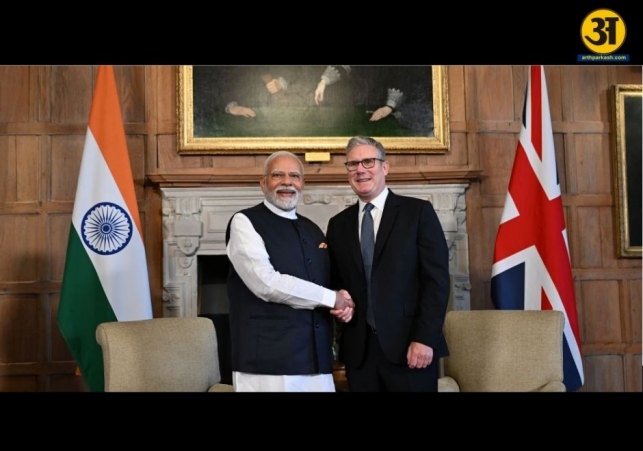
India and the United Kingdom signed a historic free trade agreement (FTA) on Thursday that aims to double the trade between the two countries to USD 120 billion by 2030. The deal, signed in London in the presence of Prime Minister Narendra Modi and UK Prime Minister Keir Starmer, follows three years of negotiations.
This agreement will reduce or remove tariffs on nearly 99% of goods traded between the two nations. For India, this means greater access to the UK market for a wide range of products such as textiles, footwear, gems and jewellery, seafood, and engineering goods. At the same time, UK products such as whisky, cars, and medical devices will become cheaper in India.
Officials said the FTA is expected to boost annual trade by USD 34 billion, making it the most significant deal signed by the UK since its exit from the European Union.
Speaking at the joint press conference, PM Modi described the day as a "historic moment" for India-UK relations. “This is more than just a trade deal. It is a shared vision for prosperity. It will benefit Indian youth, farmers, fishermen and small businesses,” he said.
Modi also expressed his condolences for the victims of the recent Ahmedabad plane crash, many of whom were British citizens. He referred to the Indian-origin community in the UK as a "living bridge" between the two countries, saying, "They did not just bring curry from India but also creativity, commitment and character."
What it means for both countries
UK Prime Minister Keir Starmer praised the FTA as the most significant economic deal Britain has made since Brexit. “This is not just good for trade; it's a powerful symbol of what two great democracies can do together,” he said.
One of the key benefits for India is the duty-free access for agricultural and food products. Indian farmers will now be able to export items like turmeric, cardamom, pepper, mango pulp, pulses, and pickles to the UK without paying import duties. This will increase demand and boost farmers’ income, especially in rural areas.
The fisheries sector in coastal states like Kerala, Tamil Nadu, Odisha, and Andhra Pradesh is also set to gain. Currently, exports such as shrimp, tuna, and fishmeal face import duties of 4.2% to 8.5% in the UK. These duties will now be eliminated, making Indian seafood more competitive.
The agreement will also support India’s labour-intensive industries, including leather, apparel, and footwear. With fewer taxes and better market access, these sectors could see a rise in exports and employment.
ALSO READ: Is voter roll cleanup fair or targeting eastern Bihar?
ALSO READ: Stuck in a thought spiral? Here’s how you can break free from the loop
For Indian consumers, the deal means access to UK-made products at lower prices. High-end goods such as Scottish whisky, premium cars, and advanced medical devices are expected to become more affordable.
British companies will also benefit from easier access to India’s vast and growing market, which is attractive for investments and trade expansion. The deal could also encourage more UK-based businesses to set up operations in India.
Apart from goods, the FTA includes provisions for cooperation in services, investment, and digital trade, making it a well-rounded agreement for both countries.
This deal comes at a time when both India and the UK are seeking to strengthen their global trade ties. For India, it’s another step in its goal of becoming a global manufacturing and export hub. For the UK, it’s a key part of its post-Brexit strategy to build strong trade partnerships outside Europe.
The agreement is also seen as a diplomatic success, showing how economic and political interests can align for mutual benefit. It reflects a deepening partnership between two democracies that share historical and cultural ties.
More details about the implementation timelines and sector-specific guidelines will be announced in the coming weeks. Until then, officials and trade bodies in both countries are preparing to take full advantage of the new opportunities.
Related News